Research Areas
My research takes an interdisciplinary approach to energy and thermal systems—integrating conventional and emerging technologies with modeling, optimization, and artificial intelligence. The goal is to develop novel solutions that enhance the efficiency, reliability, and sustainability to solve complex energy challenges.
My research currently focuses on three main areas: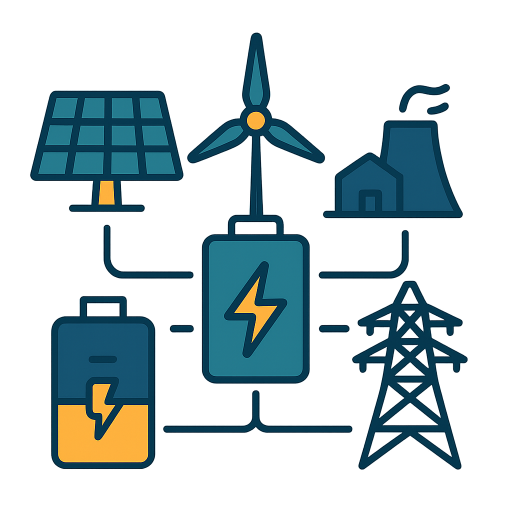
Advanced Energy Systems
Modeling & Simulation • Integrated Energy Systems • Optimization • Techno-Economics
- Multiphysics and techno-economic modeling for hybrid renewable energy systems.
- Configuration and operations optimization for efficiency enhancement and LCOE reduction.
- Development of modeling tools from scratch as well as extensions to existing tools.
- Industrial decarbonization through renewable industrial process heat.
- Site assessment and deployment strategies development.
- Applications: Concentrated Solar Power (CSP), Photovoltaics (PV), Wind Energy, Thermal Energy Storage, Conventional Power Plants, Advanced Power Cycles.
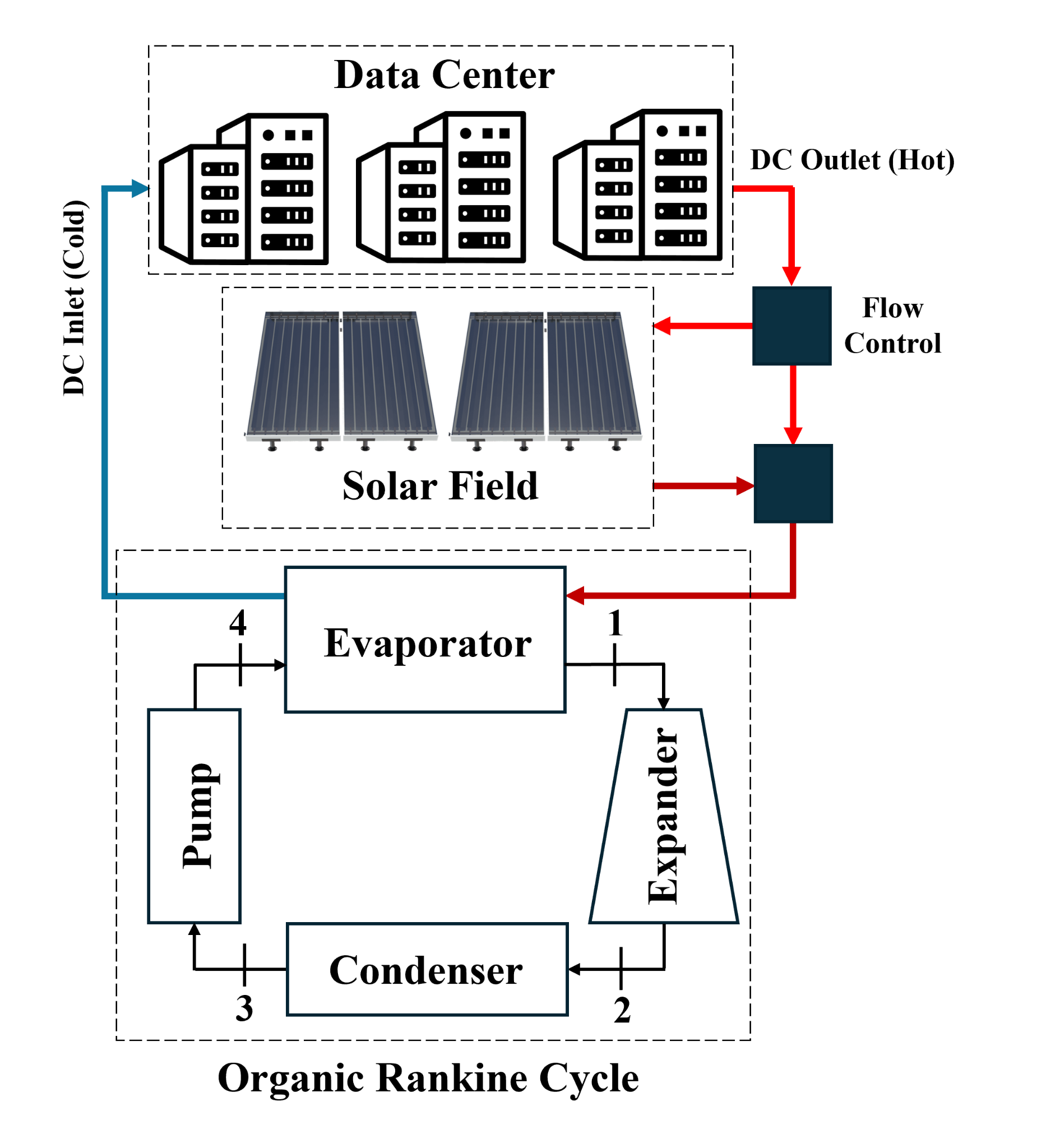
Hybrid Waste Heat Recovery
Industrial decarbonization • Data Centers • Operational Strategies • Cascaded Cycles • District Heating • Combined Heat and Power
- Solution to waste heat recovery (WHR) challenges through novel hybrid WHR systems.
- WHR integrated with renewable energy to increase self-sufficiency and reduce LCOE/LCOH.
- Application-specific thermodynamic and techno-economic model development and analysis.
- Integration with district heating and combined heat and power systems.
- Advanced control strategies for optimal operation.
- Multiple component integration: thermal storage, sCO₂ heat pumps, organic Rankine cycle and diverse waste heat sources.
- Applications: Data Centers, Industrial Processes, Mining Industry (Gas Turbines), District Heating, Combined Heat and Power.

AI for Energy Systems and Sustainability
Forecasting • Surrogate Modeling • Decision Intelligence • Time-Series Prediction • Physics-Informed ML
- Resource/load/output forecasting to improve planning and operations of energy systems.
- Surrogate models of complex thermophysical processes for real-time optimization and deployment.
- Decision intelligence for enhanced operational strategies and decision-making.
- Predictive modeling as an alternative for expensive experimental setups for thermophysical processes.
- Physics-informed ML for robust, trustworthy, and scalable AI applications.
- Applications: Energy Output Forecasting, Resource Forecasting, Optimization of CSP Plants, Optimization of Carbon Capture Utilization and Storage (CCUS).
Funding and Collaborations
Selected organizations that have supported or partnered in my research. In addition, my work has been supported by competitive fellowships; see Awards & Honors for details.